Epitalon: Mechanism, Research Background, and Laboratory Use
What Is Epitalon?
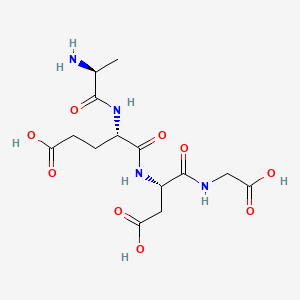
Epitalon (also spelled Epithalon or Epithalamin) is a synthetic tetrapeptide with the amino acid sequence Ala-Glu-Asp-Gly, molecular formula C₁₄H₂₂N₄O₉, CAS number 307297-39-8. It was identified by Vladimir Khavinson and colleagues at the St. Petersburg Institute of Bioregulation and Gerontology as the putative active component of a bovine pineal gland extract known as epithalamin, and it is studied as a synthetic stand-in for that extract in laboratory research.
Mechanism of Action
Research on Epitalon has focused primarily on its reported activity as a telomerase activator. In vitro studies using human somatic cell cultures found that the peptide induced telomere elongation via increased telomerase activity, allowing treated cells to divide beyond the Hayflick limit under laboratory conditions. Because telomere shortening is one of the recognized hallmarks of cellular senescence in aging research, Epitalon is most often discussed within the bioregulator-peptide research tradition associated with Khavinson’s institute, which has also investigated its reported effects on pineal gland function and melatonin regulation.
Research Background
Reported research on Epitalon spans in vitro, animal, and small human studies, the large majority of which originate from or are closely associated with Khavinson’s research group. Cited findings include telomere extension in cultured human fibroblasts, reduced chromosomal aberrations in aging mice, increased antioxidant enzyme activity in aging rats, tumor-suppressing effects in mouse models, and restoration of thymus and thyroid function in hypophysectomized chickens. Human studies from the same research tradition report increased blood telomere length in older subjects and other outcomes. Because this body of work relies heavily on a single research institute and independent replication outside of it remains limited, researchers evaluating this literature should treat the reported effects cautiously pending broader, independently conducted confirmation.
Laboratory Handling and Storage
Epitalon is typically supplied as a lyophilized (freeze-dried) powder and should be stored refrigerated or frozen prior to reconstitution, protected from light and moisture. Once reconstituted with bacteriostatic water, peptide stability is time-limited; the solution should be kept refrigerated, used within the timeframe established by the researcher’s own protocol, and protected from heat, direct light, and vigorous agitation, which can cause peptide aggregation. Standard laboratory peptide-handling practice — sterile technique, minimal freeze-thaw cycling, and accurate labeling with reconstitution date — applies.
Frequently Asked Questions
Disclaimer
This content is provided for laboratory research purposes only and is not intended as guidance for human or animal use. Epitalon, as sold by Pure Chain Aminos, is a research compound and is not evaluated or approved by the FDA for over-the-counter sale or self-administration. Nothing on this page constitutes medical advice, and no claims are made regarding safety or efficacy in humans or animals outside of a controlled research setting.
More compound research notes
- Selank: Mechanism, Research Background, and Laboratory Use
- Semax: Mechanism, Research Background, and Laboratory Use
- KPV: Mechanism, Research Background, and Laboratory Use
- Sermorelin: Mechanism, Research Background, and Laboratory Use
- CJC-1295: Mechanism, Research Background, and Laboratory Use
- Tesamorelin: Mechanism, Research Background, and Laboratory Use
- GHK-Cu: Mechanism, Research Background, and Laboratory Use
- Ipamorelin: Mechanism, Research Background, and Laboratory Use