Sermorelin: Mechanism, Research Background, and Laboratory Use
What Is Sermorelin?
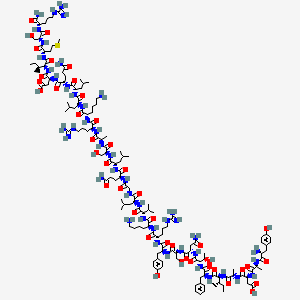
Sermorelin is a synthetic peptide corresponding to the first 29 amino acids of human growth hormone-releasing hormone (GHRH 1-29) — the shortest fragment of the native 44-amino-acid GHRH molecule that retains full biological activity. It was originally developed and FDA-approved under the brand name Geref for diagnostic GH-stimulation testing and, later, for treatment of GH deficiency. The branded product was discontinued from the US market by its manufacturer for commercial reasons, not safety findings, and the peptide itself remains a well-characterized research compound.
Mechanism of Action
Sermorelin binds the growth hormone-releasing hormone receptor (GHRH-R) on pituitary somatotroph cells. Receptor binding activates a Gs-protein/adenylate cyclase/cAMP/PKA signaling cascade, triggering synthesis and pulsatile release of endogenous growth hormone. Because Sermorelin stimulates the body’s own GH release rather than supplying exogenous GH, the resulting GH pulses remain subject to normal hypothalamic-pituitary negative feedback (via somatostatin and IGF-1), which is the central mechanistic distinction researchers study between GHRH-analog and exogenous-GH approaches.
Sermorelin vs CJC-1295: A Structural Comparison
Sermorelin and CJC-1295 are both GHRH-receptor agonists built on the same GHRH(1-29) backbone, but they differ in one key structural respect: CJC-1295 carries a Drug Affinity Complex (DAC) modification that binds circulating albumin and extends its functional half-life to several days, while Sermorelin has no such modification. Sermorelin’s unmodified half-life is short — on the order of ten to twelve minutes in circulation — which in research settings means it produces a GH pulse that more closely mirrors the timing of natural endogenous GHRH release, at the cost of requiring more frequent dosing in a study protocol than a DAC-modified analog.
Why Sermorelin Is Often Studied Alongside GHRP-Class Peptides
GHRH-receptor agonists like Sermorelin and ghrelin-receptor (GHS-R1a) agonists in the GHRP class, such as Ipamorelin, act on two separate receptor pathways that both converge on GH release. Because the pathways are independent, researchers studying combined administration have documented a synergistic increase in the amplitude of the resulting GH pulse compared to either compound studied alone. This is the pharmacological rationale behind combination research vials — PCA’s catalog includes Sermorelin as a standalone research vial as well as other GHRH/GHRP combination options for researchers designing comparative or combined-pathway studies.
Research Background
Sermorelin has a long history in the clinical and research literature as both a diagnostic tool (GHRH stimulation testing to evaluate pituitary GH reserve) and, in its branded form, a therapeutic for pediatric and adult GH deficiency prior to the market shift toward recombinant human growth hormone. That history means the receptor pharmacology, degradation pathway, and dose-response relationship are among the best-characterized of any GHRH-class peptide, which is part of why it remains a frequently referenced comparator compound in current GH-axis research.
Laboratory Handling and Storage
Lyophilized Sermorelin is generally stable for extended periods when stored at -20°C and protected from light and moisture. Once reconstituted with bacteriostatic water, the working solution has a substantially shorter shelf life and should be kept refrigerated; the exact stability window depends on reconstitution volume, storage temperature, and handling. Researchers running quantitative work should verify reconstitution mass against the lot’s Certificate of Analysis before establishing a working stock. None of the above is dosing guidance — it is standard reagent-handling information applicable to any lyophilized research peptide.
Frequently Asked Questions
What is Sermorelin?
Sermorelin is a synthetic peptide matching the first 29 amino acids of human growth hormone-releasing hormone (GHRH 1-29), the shortest fragment that retains full biological activity. It was originally FDA-approved under the brand name Geref before being discontinued from the market for commercial reasons.
How does Sermorelin work?
Sermorelin binds the GHRH receptor on pituitary somatotroph cells, activating a Gs-protein/cAMP/PKA signaling cascade that triggers pulsatile release of endogenous growth hormone. Because it stimulates the body’s own GH release rather than supplying exogenous GH, the resulting pulses stay subject to normal negative-feedback regulation.
How is Sermorelin different from CJC-1295?
Both are GHRH(1-29)-based analogs, but CJC-1295 carries a Drug Affinity Complex (DAC) modification that extends its half-life to several days, while Sermorelin has no such modification and clears in roughly ten to twelve minutes — producing a GH pulse timed closer to natural GHRH release, at the cost of more frequent dosing in a research protocol.
Why is Sermorelin often studied alongside GHRP-class peptides?
GHRH-receptor agonists like Sermorelin and ghrelin-receptor (GHS-R1a) agonists like Ipamorelin act on separate, independent pathways that both converge on GH release. Combined administration has been documented to produce a synergistic increase in GH pulse amplitude compared to either compound alone, which is the rationale behind combination research vials.
What does PCA provide with each Sermorelin batch?
Every batch ships with a third-party HPLC purity result and a mass spectrometry identity confirmation tied to the specific lot, along with research-use-only labeling. Standard reconstitution and storage information is provided — not dosing guidance.
Disclaimer
Research peptides for laboratory use only. Not approved by the FDA. Not for human consumption. Nothing on this page constitutes medical advice, dosing guidance, or a recommendation to administer any compound to any human or animal subject. By purchasing, you confirm you are a qualified researcher operating in a controlled laboratory setting.
More compound research notes
- Selank: Mechanism, Research Background, and Laboratory Use
- Semax: Mechanism, Research Background, and Laboratory Use
- Epitalon: Mechanism, Research Background, and Laboratory Use
- KPV: Mechanism, Research Background, and Laboratory Use
- CJC-1295: Mechanism, Research Background, and Laboratory Use
- Tesamorelin: Mechanism, Research Background, and Laboratory Use
- GHK-Cu: Mechanism, Research Background, and Laboratory Use
- Ipamorelin: Mechanism, Research Background, and Laboratory Use