Tesamorelin: Mechanism, Research Background, and Laboratory Use
What Is Tesamorelin?
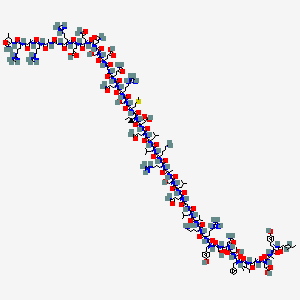
Tesamorelin is a synthetic analog of growth hormone-releasing hormone (GHRH), built from the first 44 amino acids of native human GHRH with a trans-3-hexenoyl group added to the N-terminus. That modification slows degradation by the enzyme DPP-4, giving the peptide a longer working window than unmodified GHRH in laboratory settings. Tesamorelin is notable among GHRH analogs for its regulatory history: it is the active ingredient in Egrifta, an FDA-approved therapeutic first cleared in 2010 for reducing excess visceral adipose tissue in HIV-associated lipodystrophy. That approval history makes it one of the more extensively documented peptides in this class in the peer-reviewed and regulatory literature.
Mechanism of Action
Tesamorelin binds the growth hormone-releasing hormone receptor (GHRHR) on pituitary somatotroph cells. GHRHR is a G-protein-coupled receptor; binding activates the Gs/adenylyl cyclase pathway, raising intracellular cAMP and activating protein kinase A (PKA). This signaling cascade drives CREB-mediated transcription of the growth hormone gene and stimulates pulsatile GH release from the pituitary. Because Tesamorelin acts upstream of the pituitary rather than supplying growth hormone directly, its downstream effects operate through the endogenous GH/IGF-1 axis, and research literature has used IGF-1 levels as a common pharmacodynamic marker of GHRH-receptor activity in study protocols.
Research Background
The bulk of the published clinical research on Tesamorelin comes from trials conducted for its approved indication — reduction of visceral adipose tissue in HIV-associated lipodystrophy — where it was studied for effects on visceral fat volume, IGF-1 levels, and body composition. Because Tesamorelin shares its receptor target with other GHRH analogs studied in this space (including Sermorelin and CJC-1295), it is frequently used in comparative laboratory research examining differences in receptor binding duration, degradation resistance, and downstream GH pulse characteristics across GHRH-class peptides.
Laboratory Handling and Storage
Tesamorelin is supplied as a lyophilized (freeze-dried) powder and should be stored refrigerated or frozen prior to reconstitution, protected from light. Once reconstituted with bacteriostatic water, peptide stability is time-limited and the solution should be kept refrigerated, used within the timeframe established by the researcher’s own protocol, and protected from heat, direct light, and vigorous agitation, which can cause peptide aggregation. Standard laboratory peptide-handling practice — sterile technique, minimal freeze-thaw cycling, and accurate labeling with reconstitution date — applies.
Frequently Asked Questions
What is Tesamorelin?
Tesamorelin is a synthetic growth hormone-releasing hormone (GHRH) analog built from the first 44 amino acids of native human GHRH with a stabilizing N-terminal modification. It is the active compound in the FDA-approved therapeutic Egrifta.
How does Tesamorelin differ from other GHRH analogs?
Tesamorelin’s trans-3-hexenoyl N-terminal modification slows degradation by DPP-4 compared to unmodified GHRH, giving it a longer working window in research protocols than native GHRH or shorter-acting analogs.
What is Tesamorelin’s regulatory history?
Tesamorelin is the active ingredient in Egrifta, approved by the FDA in 2010 for reducing excess visceral adipose tissue in HIV-associated lipodystrophy — giving it one of the more extensive regulatory and clinical trial records among GHRH-class peptides.
How should Tesamorelin be stored and handled in a laboratory setting?
Store the lyophilized powder refrigerated or frozen and protected from light. After reconstitution with bacteriostatic water, keep refrigerated, use within the researcher’s established timeframe, and avoid heat, light, and vigorous agitation.
Is Tesamorelin the same as growth hormone?
No. Tesamorelin does not supply growth hormone directly — it binds the GHRH receptor on the pituitary gland to stimulate the body’s own pulsatile GH release through the endogenous GH/IGF-1 axis.
Disclaimer
This content is provided for laboratory research purposes only and is not intended as guidance for human or animal use. Tesamorelin, as sold by Pure Chain Aminos, is a research compound and is not evaluated or approved by the FDA for over-the-counter sale or self-administration. Nothing on this page constitutes medical advice, and no claims are made regarding safety or efficacy in humans or animals outside of a controlled research setting.
More compound research notes
- Selank: Mechanism, Research Background, and Laboratory Use
- Semax: Mechanism, Research Background, and Laboratory Use
- Epitalon: Mechanism, Research Background, and Laboratory Use
- KPV: Mechanism, Research Background, and Laboratory Use
- Sermorelin: Mechanism, Research Background, and Laboratory Use
- CJC-1295: Mechanism, Research Background, and Laboratory Use
- GHK-Cu: Mechanism, Research Background, and Laboratory Use
- Ipamorelin: Mechanism, Research Background, and Laboratory Use