Description
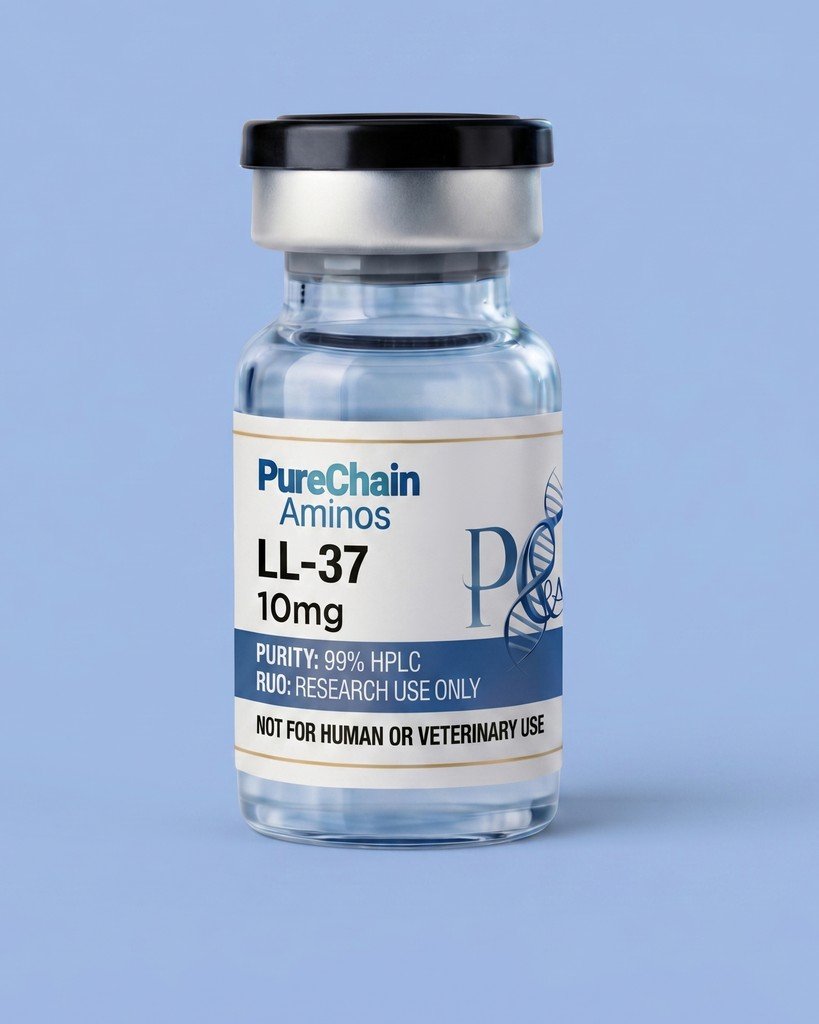
The LL-37 peptide is a human cathelicidin that acts as a host defense peptide, playing a key role in the innate immune system by exhibiting broad-spectrum antimicrobial, anti-inflammatory, and immunomodulatory functions. Found in the skin, gastrointestinal tract, and circulating leukocytes, it interacts with bacterial components and nucleic acids to modulate immune responses and may also contribute to wound healing and cancer processes.
Antimicrobial Function
Broad-Spectrum Activity: LL-37 targets negatively charged bacterial membranes, disrupting them and preventing the binding of bacterial components to Toll-like receptors (TLRs).
Inhibits Bacterial Growth: It shows broad-spectrum activity against bacteria and has anti-biofilm properties, making it a potential candidate for antibiotics.
Immunomodulatory and Healing Roles
Immune Cell Recruitment: LL-37 recruits inflammatory cells and promotes the development of anti-infective inflammation.
Wound Healing: It is involved in skin wound reepithelialization, supports fibroblast function, and promotes angiogenesis, which are crucial for tissue repair.
Gut Health: In the gastrointestinal tract, LL-37 helps protect against pathogens and maintains epithelial integrity.
Other Functions
Viral Defense: LL-37 plays a role in host defense against viral infections, inhibiting viral replication.
Cancer Therapy: It has demonstrated potential anti-cancer effects by inducing apoptosis and inhibiting tumor cell proliferation in susceptible cancer cells.
Neuroinflammation: Studies indicate LL-37 can contribute to neuroinflammation by inducing the secretion of pro-inflammatory cytokines and activating intracellular inflammatory pathways.
Challenges
Toxicity: Despite its therapeutic potential, LL-37 can exhibit high toxicity to human cells.
Stability: It is susceptible to proteolytic degradation and has lower activity in physiological environments.
Cost: The high cost of LL-37 and its derivatives limits its current clinical use.
Research is ongoing to develop LL-37 derivatives and therapeutic strategies, such as synergistic combinations and delivery systems, to overcome these challenges and harness its full therapeutic potential.
Reviews
There are no reviews yet.